April 23, 2026
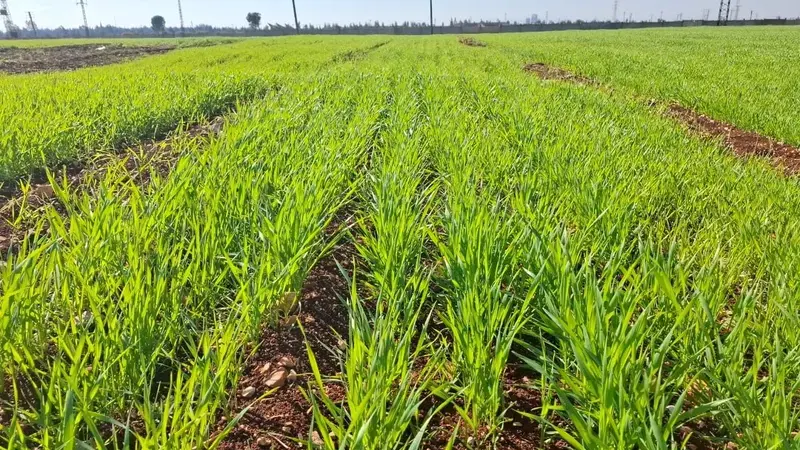 Cham 9 breeder seed, a durum wheat variety, growing at GOSM’s Al-Dar Al-Kabira multiplication plot in Homs, Syria.
Food security in Syria remains an urgent priority, and rebuilding resilient agricultural systems starts with a fundamental input: seed. Restoring access to quality seed is not only essential for productivity but also for enabling farmers to recover, adapt, and sustain their livelihoods over time.
Through a joint project funded by the UK Foreign, Commonwealth, and Development Office (FCDO), Food and Agriculture Organization of the United Nations (FAO), and ICARDA on Seed System Restoration, work is underway to reconnect crisis-affected Syrian farmers with improved, high-yielding, and locally adapted crop varieties. This effort builds on broader national momentum, including a recent high-level consultation convened by ICARDA to rehabilitate the agricultural sector and strengthen coordination across institutions.
A key step came in late 2025 with the procurement of 1,625 kilograms of early-generation seed of Syrian-released cereal and legume varieties. This critical first step ensures that high-quality genetic material is available to initiate a sustainable, in-country seed multiplication system.
Since then, with support from FCDO and FAO, seven multiplication plots have been established at ICARDA, the General Commission for Scientific Agricultural Research (GCSAR), and the General Organization for Seed Multiplication (GOSM) research stations, forming the backbone of a pipeline to deliver certified seed in the coming seasons.
To anchor the effort locally, four Seed Growers Associations (SGAs) were established in Aleppo, Hama, and Homs. Today, 49 farmers across nearly 200 hectares are producing certified wheat seed using varieties developed within Syria.
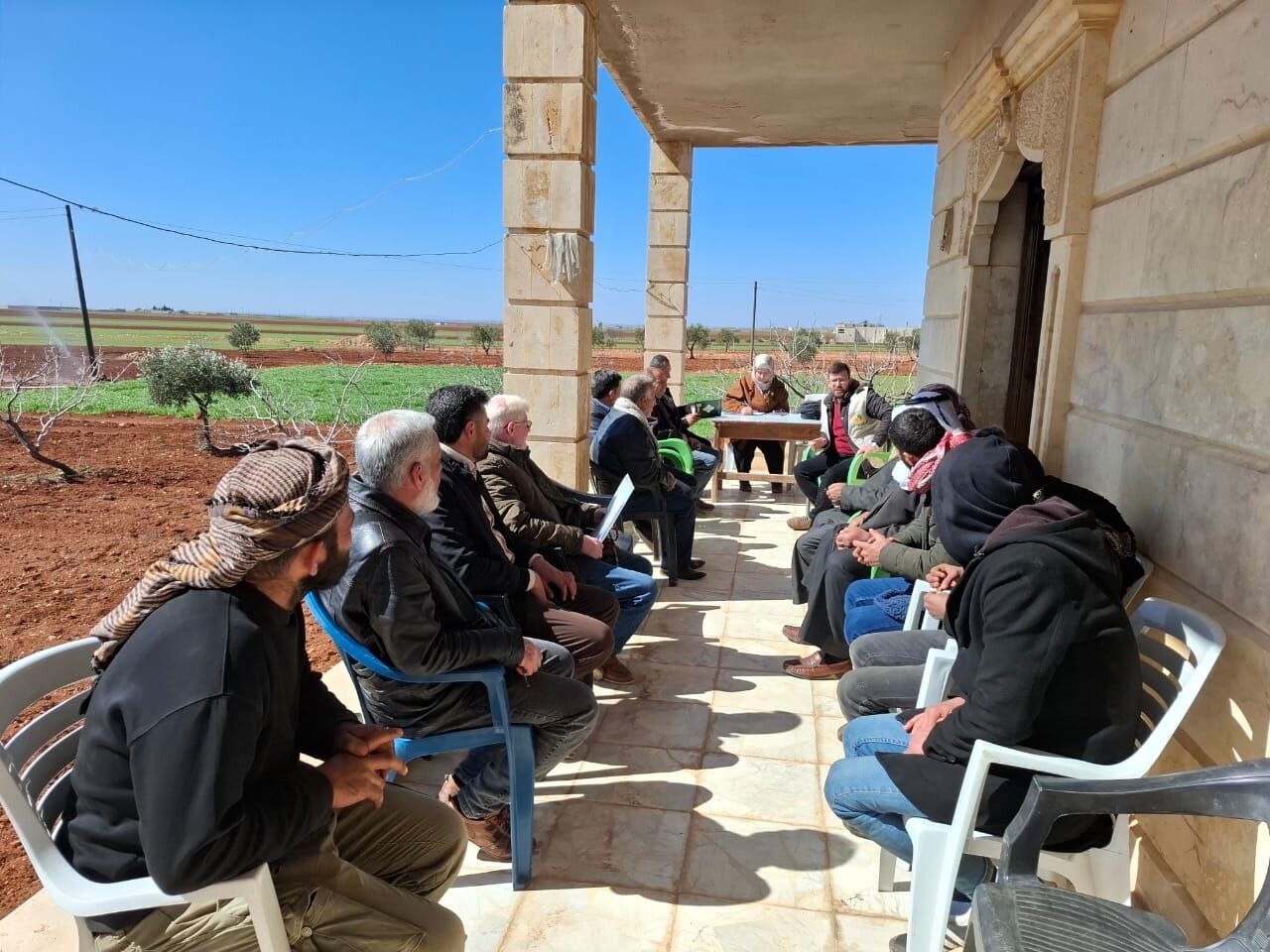 An SGA meeting in Azaz, Aleppo, to select the association’s leadership, including the group leader, deputy, and treasurer.
The initiative aims to reduce dependence on external supply, strengthen local capacity, and put farmers back at the center of seed production. At the same time, introducing drought-tolerant, disease-resistant, and high-yielding varieties helps agriculture keep pace with a harsher climate.
To support the SGAs, FAO, with logistical support from ICARDA, provided the necessary urea top-dressing fertilizer to farmers in these groups. Organizational meetings were also held for the SGAs, and work is currently underway to take the necessary steps to legalize these groups and prepare internal regulations.
As seed multiplication cycles progress, early-generation seeds are steadily moving through the system. What begins in kilograms will scale into tons. By 2027, hundreds of tons of certified seed, grown by Syrian farmers on Syrian soil, are expected to reach communities across the country.
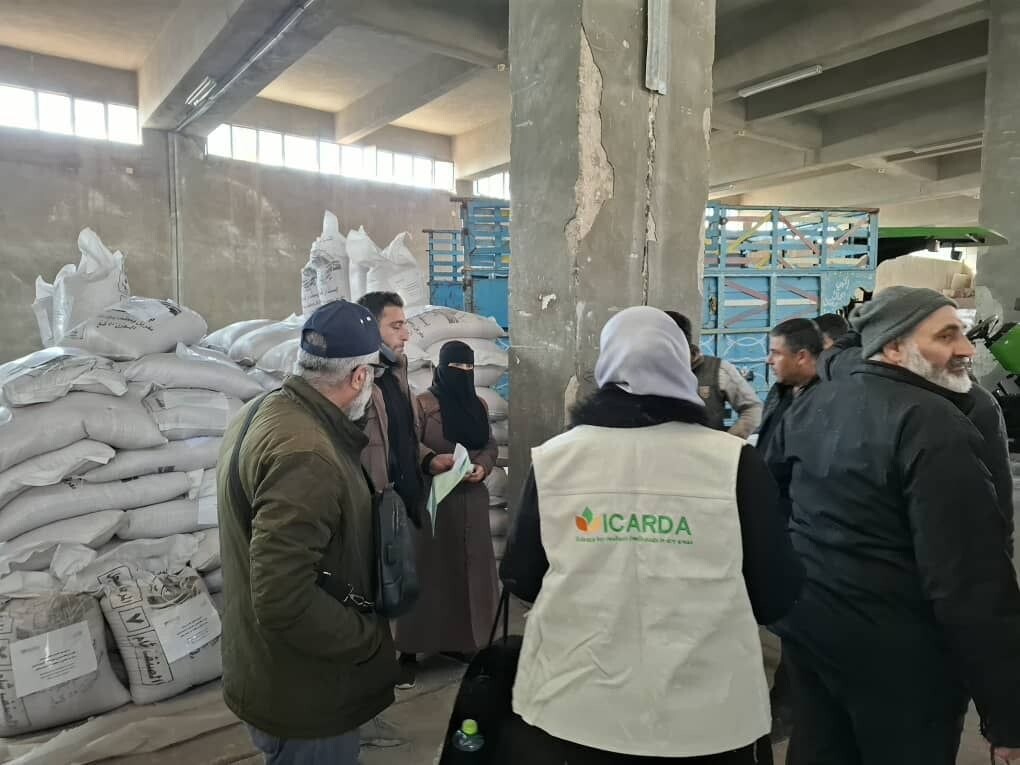 Seed distribution in Hama, Syria, with GOSM-supplied seeds delivered to Seed Growers Association (SGA) farmers.
This work goes beyond merely increasing the availability of quality, adapted seeds. It contributes to rebuilding a system - one that enables farmers to access reliable and timely inputs, improve productivity, and restore agricultural livelihoods. In doing so, it lays the groundwork for longer-term resilience and recovery in Syria’s rural landscapes and agriculture sector.




 Topics
 Species