United Kingdom
July 29, 2025
As unpredictable harvest weather continues to test the resilience of UK farming, leading plant breeders, Limagrain Field Seeds UK is urging oilseed rape (OSR) growers to treat pod shatter resistance as a fundamental requirement when selecting varieties.
“By the time oilseed rape reaches maturity, virtually all production costs have been incurred,” explains Florentina Petrescu, UK Oilseed Rape Product Manager for the breeders.
“Protecting yield right through to the combine isn’t optional – it’s essential. Incorporating pod shatter resistance into variety choice is one of the most effective risk management tools available to growers today.”
“Unlike agronomic interventions that can be adjusted in-season, pod shatter resistance is built into the genetics of the plant,” says Mrs Petrescu. “This makes the decision at variety selection time absolutely critical.”
Understanding Pod Shatter
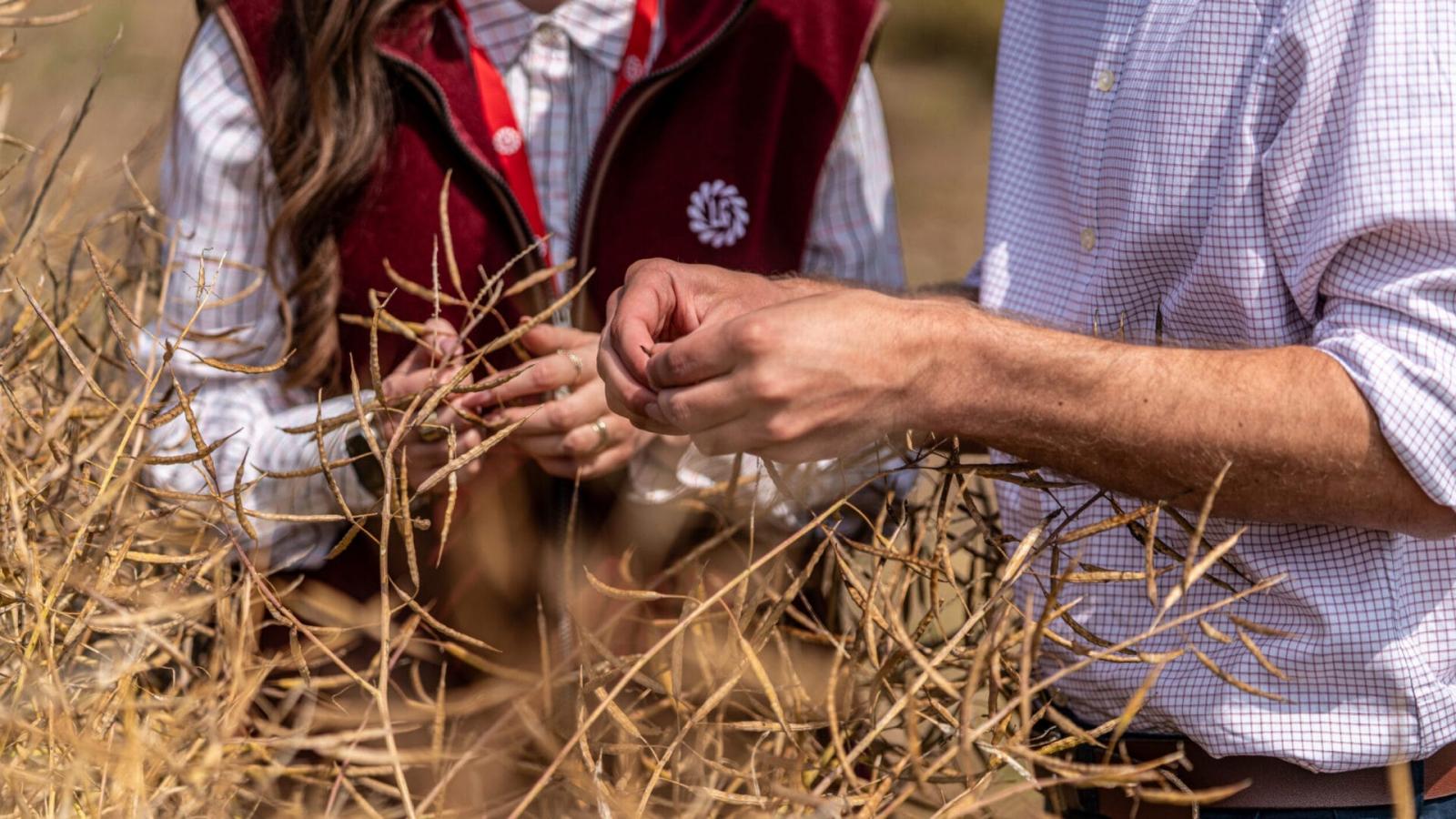
Pod shatter is an evolutionary seed dispersal mechanism in brassicas, but on farm, it can be triggered prematurely by high winds, rain, hail or machinery movement – leading to severe yield losses just days before harvest.
Not All Resistance is Equal
Limagrain conducts rigorous, laboratory-based tests to quantify pod shatter resistance (POSH) by measuring the physical force required to break open pods. Results consistently show wide performance differences between varieties, despite similar marketing claims.
“All of LG hybrids carry the pod shatter trait, and we benchmark them regularly against competitor varieties,” she says.
“The contrast was especially evident during the challenging harvest of 2023 – one of the wettest and windiest Julys on record. While many crops suffered heavy losses, Limagrain hybrids with strong pod shatter resistance emerged intact.”
A Grower’s Perspective: Managing Risk in the Borders
Northumberland farmer Richard Brewis of Woodhouse Farm, Alnwick, is firm in his belief that pod shatter resistance in the oilseed rape varieties he chooses to grow is indispensable.
His main risk is from high winds, rather than hail, and the approach is working well across his 60 hectares of OSR.
“For me, growing a pod shatter-resistant variety is a belt-and-braces strategy for growing a successful OSR crop,” he explains. “We like to aim for 5t/ha – hitting 4t/ha is acceptable – but that extra tonne could be the difference between seeds on the ground or in the trailer.”
When deciding what varieties to grow, he works closely with David Watson of Nickerson. Mr Watson’s advice is ‘why take the risk of losing crop to weather or physical damage to the crop if it’s not necessary’
“Ultimately, it means getting a valuable genetic trait without paying extra for it. Choosing a variety without pod shatter resistance at this point just seems reckless.”
This season, Mr Brewis is growing LG Wagner and LG Anarion, following past success with Limagrain’s hybrid, Aurelia, all of which offer the pod shatter resistance trait, along with other traits and agronomic benefits that he looks for, ranging from TuYV resistance to stiff straw and good Light Leaf Spot disease resistance.

LG Wagner is a hardy, high yielding variety suited for the north, with a growth habit suited to challenging growing conditions as well as offering an excellent disease package and pod shatter resistance. LG Anarion is a fully loaded, high yielding variety that also offers Clubroot resistance. It has very strong early vigour and exceptional winter hardiness which allows it to perform very strongly in areas where clubroot is endemic.
Mr Brewis complements the genetic resistance in the varieties with a pod sealant spray applied around 10 days prior to desiccation.
“Let’s face it he says, we are halfway to a good crop a week before harvest. We tend to go on with the pod stick about 10 days before desiccation as it is less brutal to the crop. The crop is lying forward when we come on with the roundup, so there is less damage to the standing plants and pods and it’s easier to pick up the tramlines,” he says.
He points out there is a practical time saving benefit to doing it this way: “It’s also easier to wash out straight pod stick and straight roundup than a mix, and mostly you can guarantee to do the pod stick in a oner since it’s not a pesticide so only one washout.”
Summary
Woodhouse Farm, 255 hectares
Rotation: wheat, winter oats, spring beans, oilseed rape, spring linseed
Key attributes for choosing an oilseed rape variety:
• High yielding
• Good oil content
• Pod Shatter
• TuYV
• Good Light Leaf Spot disease resistance
• Stiff straw
Learn more about pod shatter
Download LG Arable Guide for all the latest on our winter oilseed rape, wheat and barley varieties

Author

Florentina Petrescu, OSR Product Manager
A




 Topics
 Species