Queensland, Australia
September 25, 2025
University of Queensland researchers say co-design could be the key to linking plant breeding with biotechnology to overcome bottlenecks.
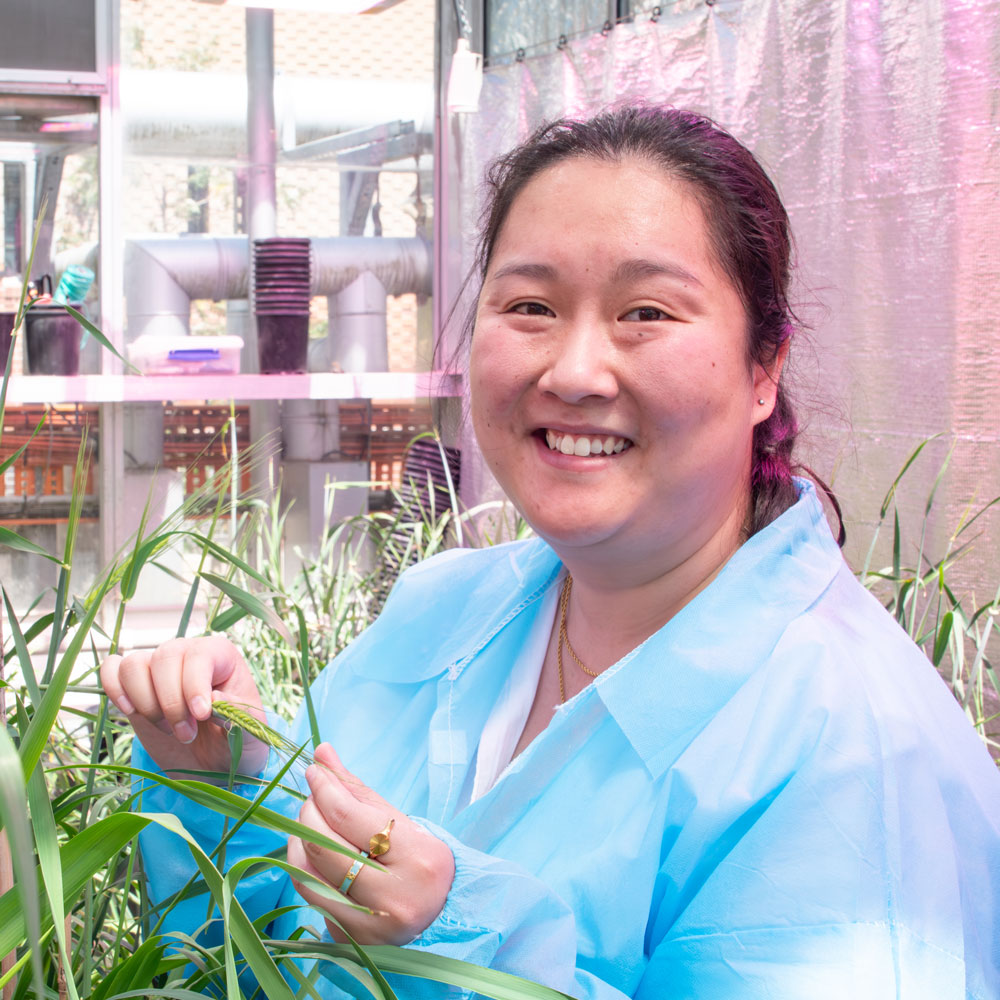
Dr Yasmine Lam in the speed breeding glasshouse. Image: Megan Pope, UQ.
In an opinion piece in Nature Plants, Dr Yasmine Lam and Professor Lee Hickey discuss the possibilities opened up by a study integrating robotics with cross pollination of genome engineered tomato plants.
“Work by Xie et al published in Cell has found a way to address the painstaking manual labour required to cross-pollinate, a major bottleneck in plant breeding, ” Dr Lam said.
“Instead of concentrating on building robots to handle the intricacies of crops, they’ve genetically engineered the crops to work within the constraints of the robots.
“At the moment creating the next generation of improved varieties of some crops still relies on skilled technicians transferring pollen by hand, one flower at a time.
“This study reverse engineered the program, editing the genome in tomato plants to generate robot-friendly flowers with protruding stigmas the robots could reach.”
Dr Lam says the proof of concept suggests new ways of thinking about problems in general.
“On the broader scale it inspires me to reshape my approach in melding our biotech work with other areas of crop science,” she said.
“It lends itself to opening that door, truly integrating technologies rather than relying on experts to individually take their own technologies to the next stage.
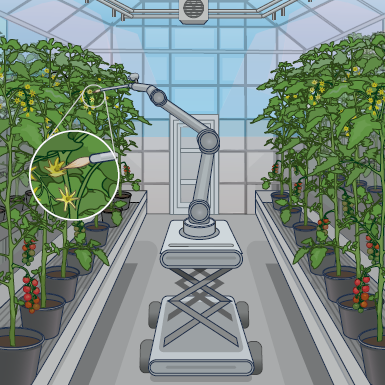
Potential improvements in automated indoor farming systems.
She said obvious challenges remain like regulations for gene-edited crops in different jurisdictions, but there is increasing acceptance of the technology globally which makes it an exciting time to be a plant scientist.
“The future of plant breeding may depend not on a choice between biology and technology but on designing both in conjunction with each other to unlock capabilities neither could achieve alone,” Dr Lam said.
“If crops can be engineered to be compatible with robotics, what other biological–technological convergences can we discover?
“The answer may not only reshape plant breeding, but how we merge biology and artificial intelligence to solve our greatest challenges.”
The opinion piece was published in Nature Plants.
Dr Lam and Professor Hickey’s research using genome editing to improve crops is supported by the Australian Research Council through a Future Fellowship (FT220100350) and by the Department of Primary Industries.
The Queensland Alliance for Agriculture and Food Innovation is a research institute at The University of Queensland established with and supported by the Department of Primary Industries.




 Topics
 Species